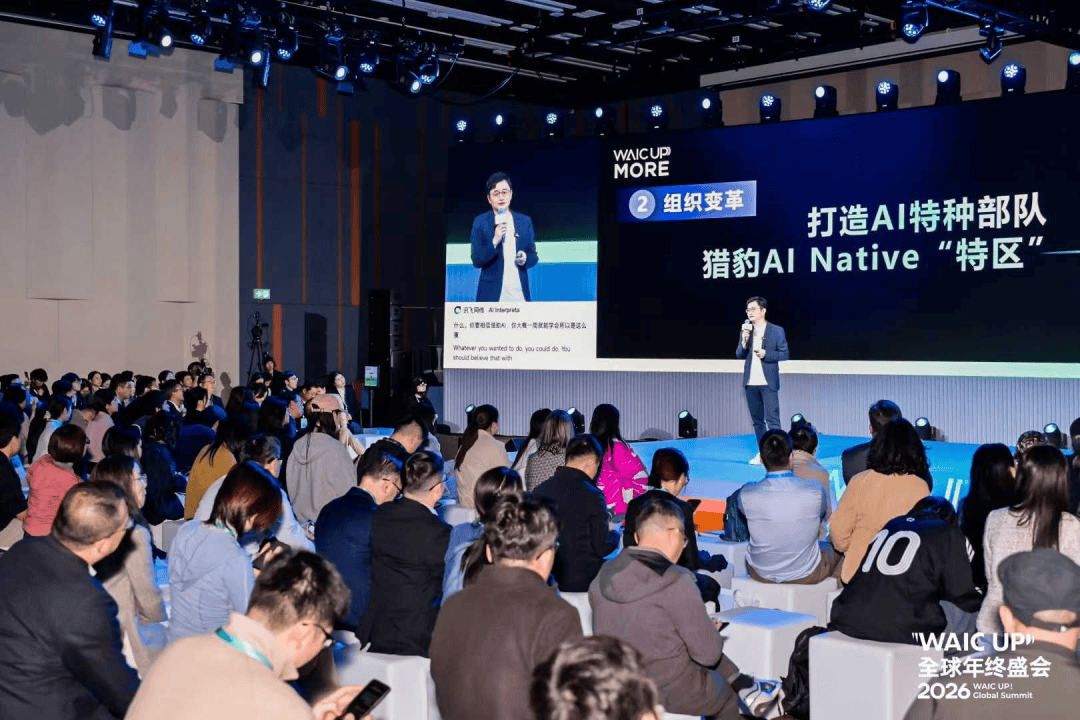
AI’s development is constantly refreshing human’s imagination boundaries. As AI accelerates its transition from research contexts to deep integration into industrial operations, capital flows, and social structures, it continues to reshape the pace and direction of global technological evolution. Meanwhile, the redistribution of computing power, models, data, and application scenarios is driving the global industrial chain to reposition itself across different regions.
Yet, we still face several critical questions: Why do most so-called "smart products" struggle in mass production? Why is AI, even with 98% accuracy, considered unsatisfactory and untrustworthy in certain fields? Against the backdrop of the global AI boom, how should Chinese enterprises navigate in the new landscape?
During WAIC Up! 2026, held on January 16th, Fu Sheng, Chairman and CEO of Cheetah Mobile and Chairman of Orion Star, accepted an exclusive interview with Zhang Yanfei, Co-founder and Editor-in-Chief of DataYuan. He believes we are on the eve of a qualitative evolution from "humans evolving around machines" to "machines evolving around humans"—a transformation that hinges on AI products crossing the finish line of that final 0.1% accuracy.
The Upper Limit of Unit ModelsHas Not Yet Been ReachedFounded in 2010, Cheetah Mobile—a Chinese tech company renowned for its overseas expansion with security tools—has quietly transformed. From its initial focus on security tools to its full embrace of the large model and intelligent agent era, this internet "veteran" and its Chairman Fu Sheng stand at the forefront of the AI industrial revolution.
In his speech at the conference, Fu Sheng described AI as an upending opportunity: "AI is the best gift from heaven to Chinese people." In his view, this wave of technological innovation has opened an unprecedented window of opportunity for Chinese enterprises. However, what truly determines success is not merely technological upgrades at the model or algorithm level, but a systemic transformation involving mindset, organization, and products. Internally, Cheetah has begun breaking down traditional functional silos through new team mechanisms, encouraging all employees to directly participate in programming and product creation. The prerequisite for all this, he emphasizes, is that the company's top leadership must truly understand AI and integrate it into long-term strategy.
In recent years, with the emergence of foundational large models such as GPT-4, Gemini, and Claude—with parameters reaching the trillion-level threshold—a concern emerges within the industry: is the "Scaling Law", where model performance improves with increased production scale and data volume, beginning to fail?
In response, Fu Sheng stated: "The Scaling Law is not something deduced in theory, but a law proven through practice. Currently, there should still be significant room for growth in the capabilities of foundational large language models." Even if some worry about changes in its manifestation—such as the growing importance of reinforcement learning—he believes the upper limit of unit models has not yet been reached.
He specifically noted that the US’ continuous large-scale construction of AI computing centers actually serves as reverse proof of the foundational models' evolutionary potential. Otherwise, such massive investments would lack commercial benefits.
Behind this expectation lies the delicate positional relationship between Chinese enterprises and global leaders in the field of foundational large models. The technology itself remains in a grey area, with its mechanism of intelligent emergence not yet fully understood. Therefore, large-scale practice is crucial—and computing power determines the scale of large model training and iteration opportunities. Fu Sheng frankly acknowledged that currently, only China and the United States possess the capability to conduct large-scale training of foundational large models, with "the United States holding a temporary lead as the current status quo." Chinese manufacturers can "maintain a solid baseline" but still have "some gaps" with the most cutting-edge levels. These gaps stem not only from computing power and data but also from continuous practical iteration and ecological accumulation.
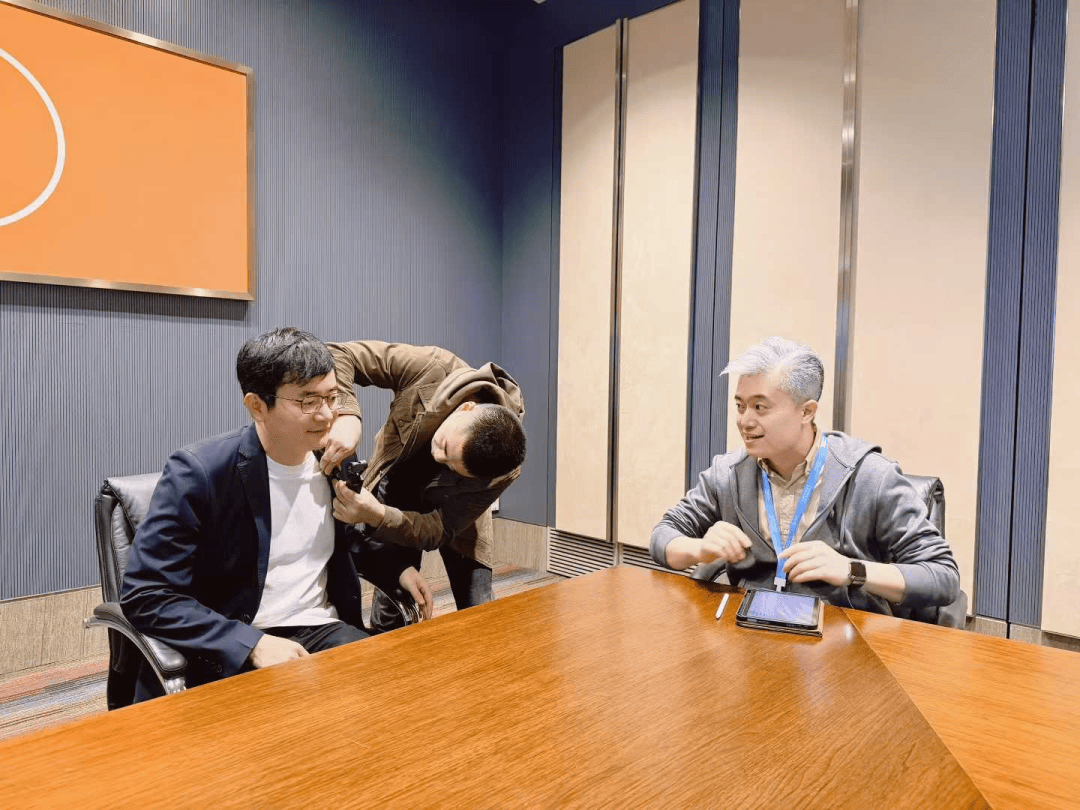
Fu Sheng Sitdown with DataYuan
The "98% Accuracy" Dilemma in Agent ImplementationIf foundational large models are AI's brain, then AI Agents are its hands and feet. 2025 is widely regarded as the "year of AI Agent explosion," making people realize that "intelligent agents" with autonomous planning and execution capabilities are the inevitable path to AI industrialization. Almost all AI enterprises will reposition themselves in this wave of evolution centered on execution capabilities.
Fu Sheng maintains a cautiously optimistic attitude toward the development of Agents. He believes an Agent's effectiveness is largely constrained by the capabilities of foundational models—especially in productivity scenarios, where even minimal error rates can lead to the failure of entire tasks. Errors, hallucinations, and logical inconsistencies may be tolerable in simple Q&A scenarios, but in enterprise-level applications such as code generation, financial analysis, and decision-making recommendations, an Agent's flaws are amplified exponentially. Products with accuracy below 98% are simply unacceptable.
This is the core challenge facing current Agent implementation: "in some scenarios, being just 10% better than others allows you to capture the entire market. In others, a 10% error rate is fatal."
How should enterprises address this "98% dilemma"?
How should enterprises address this "98% dilemma"?Fu Sheng's solution is to "narrow the scope"—trading a smaller processing boundary for improved accuracy. "When your scope is sufficiently narrow, you can raise accuracy; generalization breaks this. Currently, most breakthroughs in enterprise-side Agents start with specific scenarios rather than attempting to solve all problems at once." He compares this process to the birth of smartphones: while early models were inferior to traditional phones in areas like battery life, their unmatched capabilities in key aspects attracted users and gradually drove technological iteration.
Amid multiple challenges in Agent industrialization, AI is revitalizing many long-dormant hardware categories. Once lackluster "smart glasses" failed to gain traction because AI capabilities at the time could not support true intelligent interaction. Today, AI glasses integrated with real-time translation, scene recognition, and voice assistants offer disruptive experiences. Similarly, traditional voice recorders enhanced with AI-powered meeting summary features have evolved from niche tools to core devices to boost workplace productivity. New categories such as AI toys and personalized learning equipment are also emerging on a large scale driven by AI advancements.
Fu Sheng analyzes the underlying logic: when the capabilities of foundational large models reach a certain "threshold," AI is no longer an additional feature but a force that redefines product value. He firmly believes this evolution of AI—from tools to assistants with independent thinking—will provide each user with a dedicated life and work secretary, creating enormous industrial opportunities.
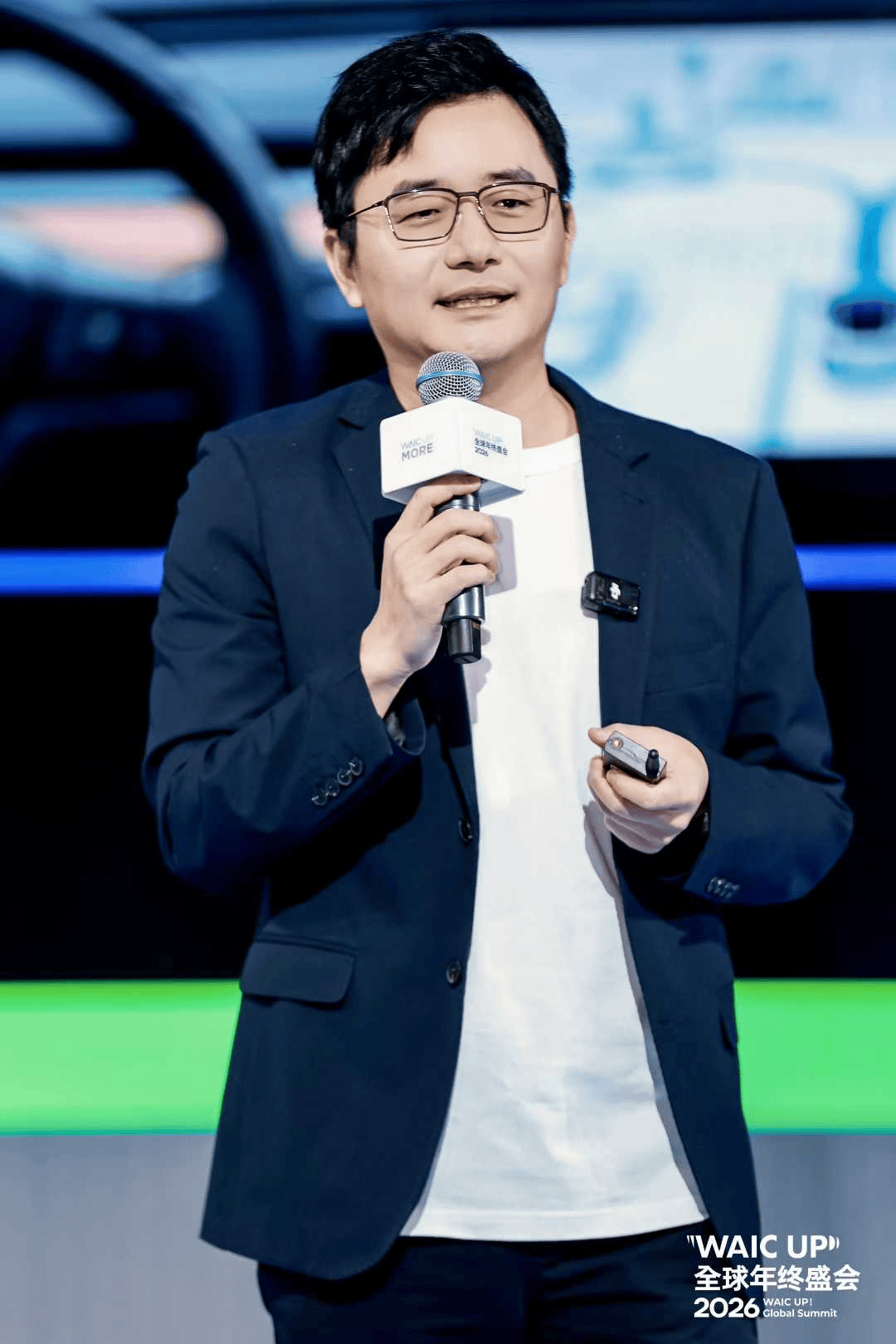
Fu Sheng delivering a speech at WAIC Up! Global Year-End Summit
Cheetah's "Three-Front Battle":A Pragmatist's Model for AI CommercializationFaced with the magnificent yet uncertain AI wave, how should companies structure their strategic layout? Fu Sheng clearly outlines three fronts:
1.Empowering Overseas Expansion: Consolidate and enhance existing advantages. Combine years of overseas market experience, cloud services, and advertising agency resources with AI Agent capabilities to provide enterprises with one-stop "AI-empowered overseas expansion" solutions, improving efficiency from deployment to marketing.
2.Software Rebirth: Reconstruct traditional products with AI. The core strategy is not to blindly pursue native AI applications but to deeply transform mature products with large existing user bases using AI. For example, evolving its traditional security software Easyclaw into an "AI Computer Assistant," where users describe problems in natural language instead of cumbersome manual troubleshooting, and Easyclaw automatically diagnoses issues and generates code for fixes. Another example is the AI-driven transformation of traditional PDF tools to improve information processing efficiency. This path of "AI rebirth" carries lower risks, minimizes user migration costs, and delivers value quickly.
3.Robot Offensive: Accelerate hard tech implementation with "end-in-mind" thinking. Regarding Orion Star's robotics business, Fu Sheng demonstrates an extremely prudent commercial logic: "In physical environments, robots can't afford errors—not 98% or 99% accuracy, but 99.9%. It's similar to autonomous driving." Fu Sheng refers to this final 0.1% as the "devil's zone," which must be controlled through three methods: sensor redundancy, verification within smaller models, and human oversight. "First, reduce the 0.1% error rate to 0.01% before venturing into home scenarios."
Thus, Orion Star's strategy is "end-in-mind": instead of pursuing parameter leadership in laboratories, focus on specific scenarios that already generate commercial returns, such as restaurant food delivery and hotel logistics. He told DataYuan: "Find a good scenario, implement it, and ensure it operates effectively in commercial settings." This focus on specific scenarios provides tactical guidance for Cheetah's product layout. In July 2025, Cheetah acquired Ufactory, a collaborative robot arm company, further expanding the deployment of robotic arms in commercial scenarios.
In Fu Sheng's view, crossing the gap from 0.1% to 0.01% is not only a benchmark for technological maturity but also a critical turning point for AI to move from "usable" to "trustworthy" and from "tool" to "partner." This process, ultimately, returns to the essence of technology—user experience. When machines fully understand humans and serve them reliably, the form of interaction will naturally evolve.
The Ultimate Form of Interaction: From "Humans Adapting to Machines" to "Machines Adapting to Humans"All competition ultimately returns to the origin of user experience.
With the accelerated evolution of the intelligent agent era, Fu Sheng emphasizes that every app deserves to be rebuilt with AI at its core. The key driver of this transformation is AI's ability to understand user intentions and directly solve problems.
He gives an example: in the past, even with graphical interfaces, users still had to learn how to operate—such as finding the payment button. Today, AI can proactively act on human needs, not only generating answers but also completing operations directly. Take the recently popular app "Si Le Ma" (Did It Die?): its founder "may not have written much code" yet built version 1.0 in just 30 days using AI—something "unimaginable in the past."
Following this trend, Cheetah Mobile is committed to comprehensively AI-transforming its existing mature products. Currently, Cheetah is focusing on the office efficiency field and upgrading traditional security software and cleaning tools into its"Computer AI Buddy" Easyclaw. Based on thousands of fault cases accumulated over the years, the AI can now, based on users' verbal descriptions, write diagnostic codes on the spot to solve problems such as printer connection or system errors. It is reported that compared to Openclaw, Easyclaw not only supports one-click deployment but also offers a free trial. Recently, Easyclaw has just been launched as a mobile APP, allowing remote control of the computer from a mobile phone, file transfer, scheduling meetings, locking the computer screen, and so on.
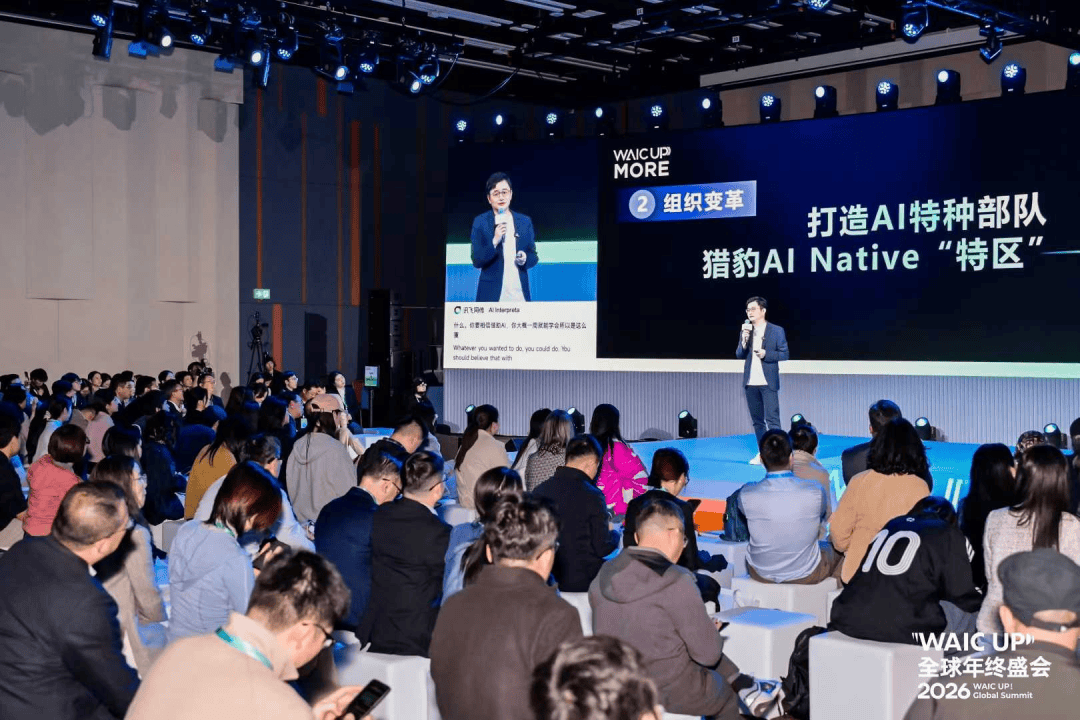
Fu Sheng delivering a speech at WAIC Up!
Meanwhile, Agents are driving disruptive changes in interaction methods. Fu Sheng stated that the internal test version of Cheetah's AI Computer Assistant features only a single dialogue box. When a user says "help me delete junk files," the Agent directly calls scripts, clears caches, and displays a report—no more tedious clicking through layers of menus.
Quoting Steve Jobs, he pointed that "every UI revolution is a massive industrial opportunity."
First was the shift from command-line interfaces to graphical interfaces, and the second is to touchscreens. Today, interaction using natural language is ushering in the third wave. The future form of applications may no longer be isolated icons requiring learning and clicking. Instead it will be "intelligent agents" capable of understanding users' vague intentions, autonomously invoking various services, and completing complex tasks.
This is not merely a technological upgrade but a shift in product philosophy—from " machines evolving around humans " to " machines evolving around humans."
Cheetah's transformation journey is an epitome of how Chinese tech enterprises are embracing the AI wave—forgoing blind pursuit of trends and instead leveraging their inherent strengths to find the optimal entry points for AI in overseas experience, software accumulation, and hardware scenarios. In this era where "every application deserves to be rebuilt," it is perhaps this combination of pragmatism and vision that will define the competitive landscape of the next phase.


