Mastering AI-Powered English Content Creation: A Step-by-Step Guide
In today's digital landscape, producing high-quality English content consistently is a challenge for website owners and social media managers. This guide provides a detailed tutorial on using a powerful AI-driven software to automate the entire process, from content discovery to publication, helping you scale your efforts and drive traffic efficiently.
This tool functions as an automated content factory. It leverages AI to handle the heavy lifting of acquiring, filtering, processing, and publishing articles. By following these steps, you can set up a fully automated workflow that generates relevant, high-quality English articles tailored to your specific needs.
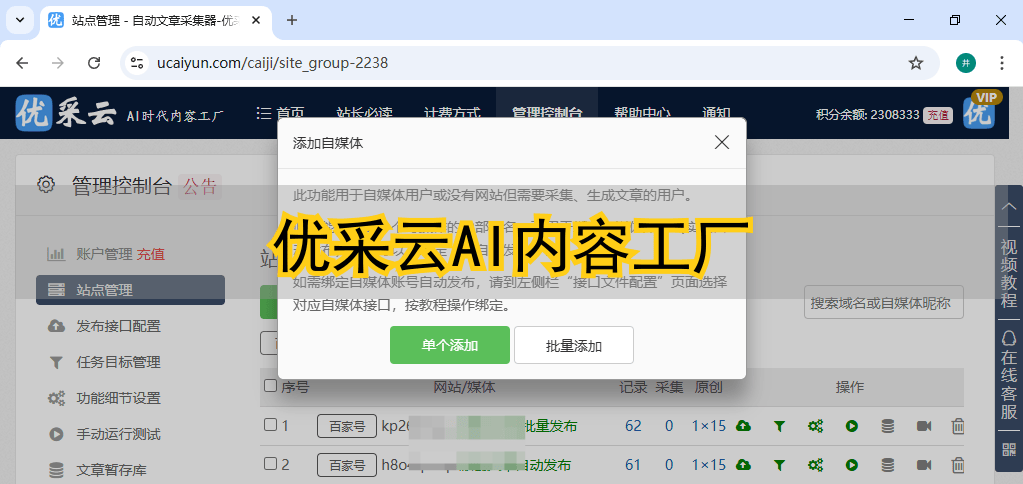
Step 1: Setting Up Your Publishing DestinationsThe first step is to tell the software where you want your content to end up. You'll need to add a "site," which represents either your own website or your social media accounts.
For a Website: You'll typically add your website's URL and configure the connection details. This involves setting up the necessary interface for the software to communicate with your site's content management system.
For Social Media: You'll add your social media accounts, such as a WordPress blog, a platform for creators, or a channel for short videos. This allows the software to publish content directly to these platforms.
Step 2: Configuring Auto-Publishing InterfacesThe core feature of this tool is its ability to publish content automatically. To enable this, you need to configure the publishing interfaces. This step creates the data bridge for your articles.
For Websites: You will likely need to provide an API endpoint or configure a publishing plugin/file that receives the article data from the software and creates a post on your site.
For Social Media: This involves connecting your social media accounts via API, which usually requires granting permissions through an authorization process. The software will then be able to post on your behalf.
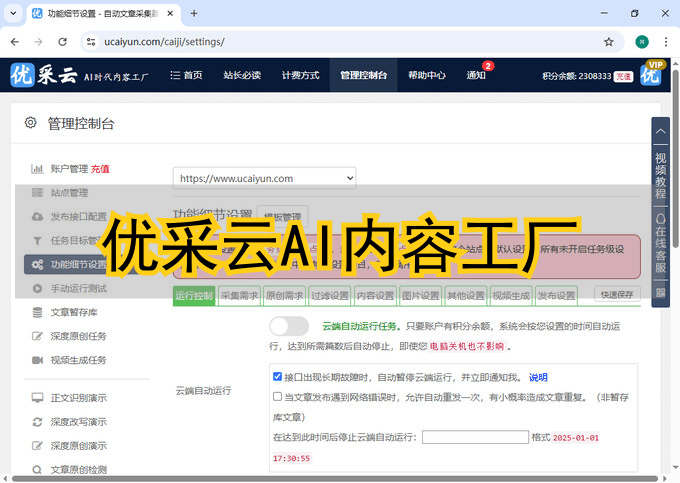
If your intention is only to generate and download articles for manual publishing, you can skip this configuration.
Step 3: Defining Your Content Goals with TasksNow, you need to tell the software what kind of content you need. This is done by creating a "task goal." A task is the basic unit of work, and its primary purpose is to define the topics or sources for your articles. You can set this up in a few ways:
Using Keywords: This is the most common method. You input a list of keywords relevant to your niche. The system will then use these keywords to either fetch existing articles from the web or generate new, original content. For an English website about technology, you might use keywords like "artificial intelligence trends," "best budget smartphone," or "cloud computing benefits."
Using Specific URLs: You can also provide direct links to article pages or to the list pages of other websites you want to target for content ideas.
Step 4: Fine-Tuning the Details for Quality and ControlWith your goals set, the next step is to dive into the settings that dictate the software's behavior and final article quality. This is where you customize the output.
General Control & Scheduling:
You can enable cloud-based automatic operation. Once activated and with sufficient account balance, the system will run according to your schedule, even when your computer is off. You can set it to run 24/7 or only during specific hours, and define how many articles you need.
Content Sourcing & Originality:
You can choose between two primary modes:
Web Collection: The tool collects existing articles from search engines. You can select specific sources like general web search, news, or even international search engines like Bing for high-quality English content. Filters help prevent duplicate or low-quality articles.
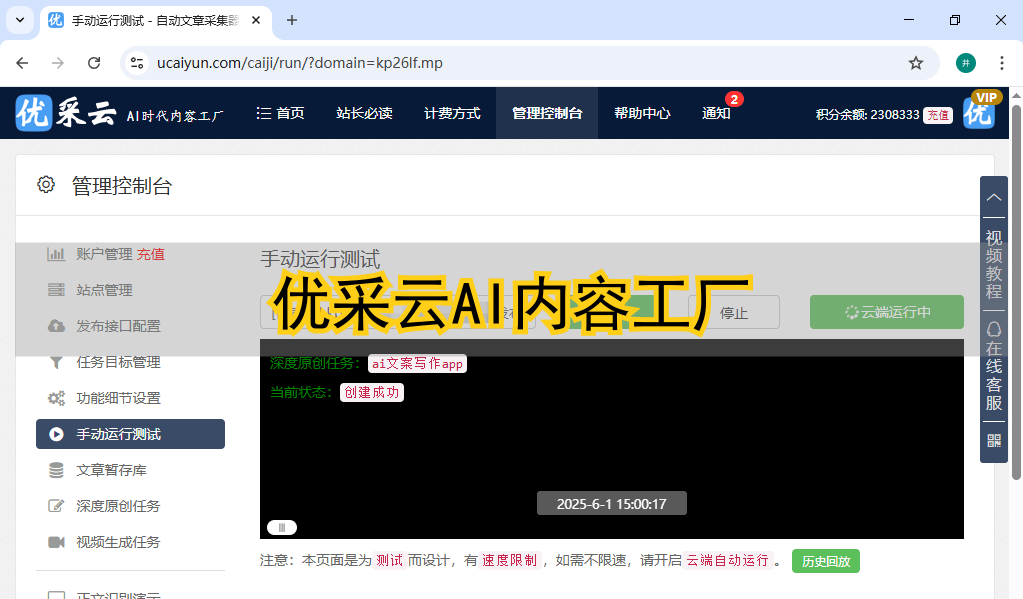
AI Original Generation: This is a key feature for creating unique English content. You can turn on the "Original Task" and set how many original articles you want per hour. The "Algorithm Version" allows you to set the desired article length and even provide "Additional Requirements" to the AI for more personalized content. You can also opt to have the AI use online references to ensure factual accuracy.
Advanced Filtering and Optimization:
To ensure you get the best English articles, a robust set of filters is available:
Duplicate Prevention: You can prevent the same article URL or highly similar content from being collected again.
Relevance & Quality Filters: Set thresholds for how closely an article must match your keywords. Filters for "Garbage Text" and "Content Coherence" automatically discard poorly written or nonsensical content.
Length Control: Define minimum and maximum article lengths to ensure the content meets your requirements.
Vocabulary Filtering: Input a list of words you want to exclude from any article, which is crucial for maintaining brand safety and avoiding sensitive topics.
Content Processing & Enhancement:
Before an article is finalized, you can apply various processing steps:
Title Generation: You have extensive control over titles. You can choose to use the original title, combine it with your keyword, add random prefixes, or leverage the AI Original Title feature. For the latter, you can specify a style, such as "SEO style" for search engines or "social media style" for platforms like your social media accounts, to maximize click-through rates.
Article Rewriting (Spinning): If you are using collected articles, you can rewrite them to improve uniqueness. The tool offers "Smart AI Edition" for sentence-level changes and "Deep Rewrite Edition" for a more thorough,篇章-level rewrite, significantly reducing similarity to the source.
Translation: You can automatically translate collected articles into English or other languages, broadening your content's reach.
Content Insertion & Replacement: You can set rules to automatically insert specific keywords into the body of the article or perform content replacement to standardize terminology or add affiliate links.
Image Handling: This is critical for engaging content. You can choose how to handle images: download them to your server (localize), upload them to cloud storage, or use the original remote URLs. The Auto Image Matching feature is powerful – it can automatically find relevant images from the web for articles that lack them, based on your chosen strategy. You can even use AI-generated images.
Step 5: Launching Your Automated WorkflowWith everything configured, it's time to start the task. There are two ways to run it:
Manual Run: This is useful for testing. Clicking the "Start" button will run the task immediately, and the results will be displayed in your browser. It helps you verify that all your settings are working correctly.
Cloud Run: For true automation, enable "Cloud Automatic Operation." The system will then execute your task in the background according to the schedule you set (e.g., every hour), generating and processing articles without any further intervention from you.
Step 6: Reaping the Rewards - Viewing and Publishing ResultsThe final step is to see the fruits of your automated labor. Where your articles end up depends on your "Article Delivery Method" setting.
Automatic Publishing: If you configured your interfaces in Step 2, the system will automatically publish the finished articles to your website or social media accounts. It handles everything, from posting to managing settings like categories, tags, and even SEO meta-descriptions. You can also configure platform-specific options, such as declaring originality on some platforms or enabling user tipping on others.
Manual Publishing: If you prefer to review articles before they go live, you can choose this option. All generated articles will be stored in a temporary library within the system. From there, you can manually edit them, copy the content, or download them in bulk before publishing them yourself.
By systematically working through these steps, you transform a complex, time-consuming process into a streamlined, automated pipeline. This powerful software empowers you to consistently produce high-quality English content, allowing you to focus on strategy and growth while the AI handles the heavy lifting of content creation and distribution.


